


Beyond framing your smile, your gums help support your teeth, protect the structures underneath, and play an important role in your overall oral health. When gum disease develops, it can quietly damage those supporting tissues over time. The good news? With the right care, periodontal health concerns can be monitored and managed.
At Steven Schneider, DDS, we take gum health seriously. With more than 40 years of dental experience and a longstanding interest in dental research and technology, Dr. Schneider offers a thoughtful approach to periodontal care that prioritizes your comfort, preserves healthy tissue whenever possible, and helps you understand your options.
Here, you’ll receive no lectures about the flossing you forgot last Tuesday, just a plan to help get your gums healthy.
What Is Periodontal Disease?
Periodontal disease, commonly called gum disease, is an infection and inflammatory condition affecting the tissues supporting your teeth. It often begins with gingivitis, when plaque buildup causes the gums to become red, swollen, or prone to bleeding.
Without the appropriate care, gum disease can progress and damage the tissues and bone supporting your teeth. Advanced periodontal disease may lead to gum recession, loose teeth, and tooth loss.
Common signs of gum disease include:
- Gums that bleed when brushing or flossing
- Red, swollen, or tender gums
- Persistent bad breath
- Gums that appear to be pulling away from the teeth
- Teeth that feel loose or have shifted
- Changes in the way your teeth fit together
Gum disease doesn’t always cause noticeable symptoms in its early stages, which is one reason regular dental examinations matter. If you’ve noticed changes in your gums, or it’s been a while since your last dental visit, we’ll help you understand what’s happening and what to do next.
Top periodontal services at Steven Schneider, DDS, include:
Periodontal Deep Cleaning (Scaling & Root Planing)
Scaling and root planing is a nonsurgical periodontal treatment that removes plaque and tartar from above and below the gumline and smooths the root surfaces to help the gums heal and reattach where possible. It’s commonly recommended when gum disease has progressed beyond what a routine professional cleaning can address.
Depending on your needs, treatment may be completed in sections of the mouth. We’ll explain what to expect and how to care for your gums afterward.
ARESTIN® Antibiotic Therapy
For certain patients with periodontal pockets, ARESTIN® may be used alongside scaling and root planing. ARESTIN® contains minocycline, an antibiotic delivered directly into selected periodontal pockets to help reduce bacteria associated with gum disease. It can provide an additional treatment option in areas where deeper pockets remain a concern.
We’ll determine whether ARESTIN® is appropriate based on your periodontal evaluation and treatment needs.
Antimicrobial Rinse Therapy
Antimicrobial rinses may help reduce certain oral bacteria and support a periodontal treatment plan when used as directed.
Depending on your situation, we may recommend an antimicrobial rinse as part of managing gum inflammation or maintaining periodontal health. Rinses are not a substitute for professional removal of plaque and tartar, but they can be useful as part of a broader approach to care.
Laser Gum Therapy (LANAP®)
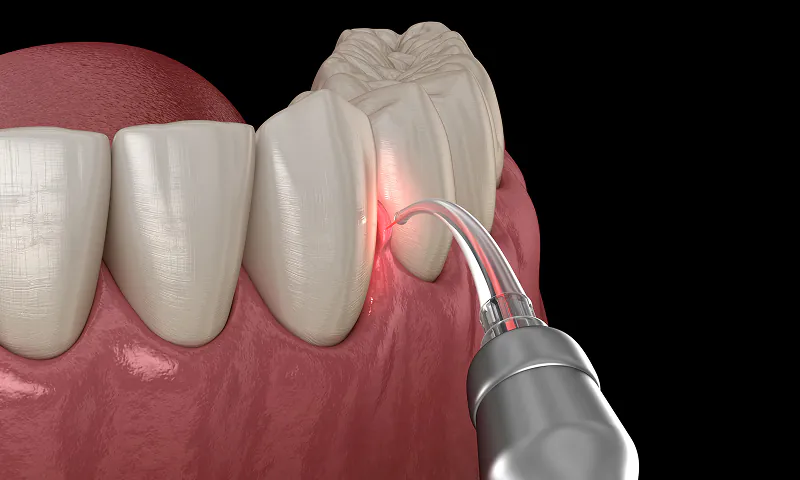
Laser-assisted periodontal treatment may be an option for some patients with gum disease. LANAP® is a specific laser-assisted protocol designed to treat periodontal disease while targeting diseased tissue and bacteria. It can help support healing while limiting the need for more traditional surgical approaches.
Pinhole® Gum Rejuvenation
Gum recession can expose sensitive root surfaces and make teeth appear longer than usual. In some cases, it may also increase the risk of root sensitivity or other complications.
The Pinhole® Surgical Technique is a minimally invasive approach to treating certain types of gum recession. Rather than using traditional gum graft incisions, the technique uses a small access opening through which the existing gum tissue is repositioned.
Gingival Contouring & Gummy Smile Treatment
Your gum line can influence the proportions of your smile. If excess gum tissue makes your teeth appear shorter or creates an uneven gumline, gingival contouring may help create a more balanced appearance. Treatment involves reshaping selected gum tissue, sometimes using laser technology when appropriate.
A Holistic Approach to Gum Health
Our approach to periodontal care considers your entire smile and whole-body health. We look at the relationship between your gums, teeth, existing dental work, bite, oral hygiene habits, and individual risk factors. We’ll also discuss practical ways to maintain your results, including home care and the appropriate frequency of periodontal maintenance visits.
Healthy gums are an important part of preserving natural teeth. Treating periodontal disease early and maintaining your gum health can help protect the foundation your smile depends on.

Keeping Your Gums Healthy After Treatment
Periodontal treatment doesn’t end when the initial procedure is complete. Ongoing maintenance is important because gum disease can return, particularly in areas that have been affected previously. Your maintenance plan may include:
- Professional periodontal maintenance visits
- Regular monitoring of gum pockets and inflammation
- Personalized brushing and interdental cleaning guidance
- Recommendations for appropriate oral hygiene products
- Follow-up evaluations to assess your gum health
We’ll help you understand which habits and follow-up appointments are most important for your situation.
Ready to Put Your Gum Health Back on Track?
If you’re looking for periodontal treatment in San Diego, CA, we’re here to help you explore your options. Healthy gums are worth protecting. Let’s get to work to find the right solution for you.
Schedule a periodontal evaluation with Steven Schneider, DDS, to learn more about your gum health today!


